MARKET SNAPSHOT
$1,848 3Q 2024
93.3% 3Q 2024
3,799 [YTD: 9,080]
-1.1% 3Q 2024
-60 BASIS POINTS
5,440 [YTD: 14,802]
The Denver rental market is experiencing continued effects of a supply overhang, with deliveries on pace to reach an all-time high in 2024. However, rental demand has been growing, with net absorption increasing at twice the rate of new completions over the past year.
The construction pipeline is beginning to decline. Several developments were expedited to get ahead of new affordable housing restrictions implemented in 2022. Units from this rush of construction broke ground in late 2022 or 2023, and the pipeline has been contracting as they come online.
Occupancy rates have been declining due to the new supply and are now below historical averages. However, they should begin to stabilize as the pipeline continues to shrink in a market with a rapidly expanding population. These factors should also reverse rent trends back to positive growth.
3,799 UNITS
[YTD: 9,080]
Although deliveries in the third quarter of 2024 increased by 49% year-over-year, demand—measured by net absorption—has grown at twice the rate of deliveries during this period. Over the first three quarters of the year, more than 9,000 units have been absorbed on a net basis, surpassing the total net absorption in each of the past two years. Furthermore, the disparity between net absorption and deliveries is at its lowest level since early 2023. Nevertheless, deliveries are on pace to reach a record high, and net absorption will need to continue increasing exponentially to offset the impacts of the supply overhang.
Net demand was greatest in Downtown Denver, which accounted for nearly a third of the units absorbed in the metro area over the past year. The East Denver and South Douglas County submarkets had the second-highest concentrations of absorption, with demand far exceeding new completions in the latter, one of the few submarkets in the region with a positive imbalance.
5,440 UNITS
[YTD: 14,802]
The Denver multifamily market has experienced a housing boom in recent years, which is now starting to subside. In the current quarter, around 15,000 apartment units are under construction—a significant drop from the first quarter of 2023, when nearly 32,000 units were being built. While construction remains active, new project starts have sharply declined as developers struggle to secure financing. Market insiders note that building in Denver has become increasingly challenging. Local obstacles include lengthy delays in the permitting process and the implementation of an affordable housing policy that requires new developments of 10 or more units to allocate 8% to 15% of units as affordable housing. In the lead-up to the policy’s mid-2022 passage, developers rushed to submit plans to the city. Most of the properties from that rush broke ground in late 2022 through 2023, and the construction pipeline is shrinking as these projects come online.
Downtown Denver has seen some of the highest rates of new completions among submarkets nationwide. Approximately 3,300 units are in the pipeline, in addition to the 4,400 units delivered over the past 12 months—accounting for roughly a quarter of the metro area’s total during this period. Outside of Downtown, developers have primarily focused on emerging live/work/play hubs located along Denver RTD’s expanding light rail network. This trend is particularly notable along the A Line, which opened in 2016 and connects Denver International Airport to Union Station in Downtown.
As the construction pipeline approached record highs toward the end of 2022, the metro area’s overall occupancy began to decline, steadily dropping from its ten-year average of around 95% to 93% in the current quarter. New completions are expected to remain elevated through the end of 2024, continuing to place downward pressure on the average occupancy level, which declined by 60 basis points over the past year. However, rapid population growth will help absorb the new supply as the construction pipeline shrinks further. These factors are expected to stabilize occupancy rates in the coming year.
Downtown Denver had one of the lowest stabilized occupancy rates due to experiencing the highest concentration of new completions. However, over half of the submarkets in the metro area maintained occupancy levels at or above the national benchmark of 94%. Stabilized occupancy rates were fairly consistent across all property tiers throughout Denver, ranging from 93% to 94%
A robust spring leasing season led to modest rent increases in the first half of the year, a notable achievement for property owners considering the large number of units delivered during this period. However, the market’s historic wave of new supply has since put downward pressure on rent growth, as the average occupancy rate declined. Over the past year, average rents fell by 1.1%, placing Denver in the bottom half of major metros in the country and trailing the national average of a 1.0% increase. This marks a sharp contrast from the demand surge in 2021, when rent gains exceeded 10% annually, and is a rate well below the ten-year annual average increase of 3.8%. Nonetheless, rent trends are expected to improve as supply and demand fundamentals realign.
With an average effective rent of $1,848, Denver is one of the most expensive non-coastal major markets in the nation, prompting many renters to seek more affordable neighborhoods. As a result, suburban submarkets with lower rents and limited new supply have outperformed. The Gilpin County and Englewood/Littleton submarkets offer some of the most affordable rents in the area and are leaders in rent growth, with annual increases of 1.4% to 2.0%. The overall rent trend has likely been skewed downward by two severely underperforming outlying submarkets, Clear Creek and Elbert County, which experienced annual decreases of 14% or more.
Contractions in the extractive industries sector and reduced discretionary spending by consumers led to moderate job losses over the past year. Total nonfarm employment in the metro area declined by 0.3% year-over-year, and the 3.4% annual gain observed in both the financial activities and government sectors were not sufficient to offset these job losses. The mining, logging, construction, and leisure and hospitality sectors, which account for nearly 20% of all Denver jobs, experienced declines of 2.6% to 3.0% during the past year. The metro area’s current unemployment rate of 4.4% is 100 basis points higher than in August 2023 and 190 basis points above its pre-pandemic level for the month, but equal to the national average. Additionally, Denver’s highly educated workforce, globally connected airport, low-tax environment, and population growth should help keep future job losses to a minimum.
August 2024 ANNUAL JOBS CREATED
AUGUST 2024 EMPLOYMENT GROWTH
AUGUST 2024 Unemployment rate
4.4% us August rate
Nominal Change
from August 2023
to August 2024: 7,200
Percent Change: 3.4%
Nominal Change
from August 2023
to August 2024: 6,700
Percent Change: –2.6%
Nominal Change
from August 2023
to August 2024: 4,000
Percent Change: 3.4%
Nominal Change
from August 2023
to August 2024: 3,500
Percent Change: 1.7%
Nominal Change
from August 2023
to August 2024: -500
Percent Change: -0.7%
| Sector | Nominal Change from August 2023 to August 2024 | Percent Change |
|---|---|---|
| Government | 7,200 | 3.4% |
| Mining, Logging, and Construction | 6,700 | -2.6% |
| Financial Activities | 4,000 | 3.4% |
| Education and Health Services | 3,500 | 1.7% |
| Manufacturing | -500 | -0.7% |
| Other Services | -600 | -0.9% |
| Information | -1,300 | -2.5% |
| Professional and Business Services | -3,600 | -1.1% |
| Trade, Transportation, and Utilities | -4,700 | -1.6% |
| Leisure and Hospitality | -5,500 | -3.0% |
In September 2024, online sports betting giant Bet365 opened its new national headquarters in Denver. The company renovated two floors, or 120,000 square feet, at the One Platte building at 1701 Platte Street.
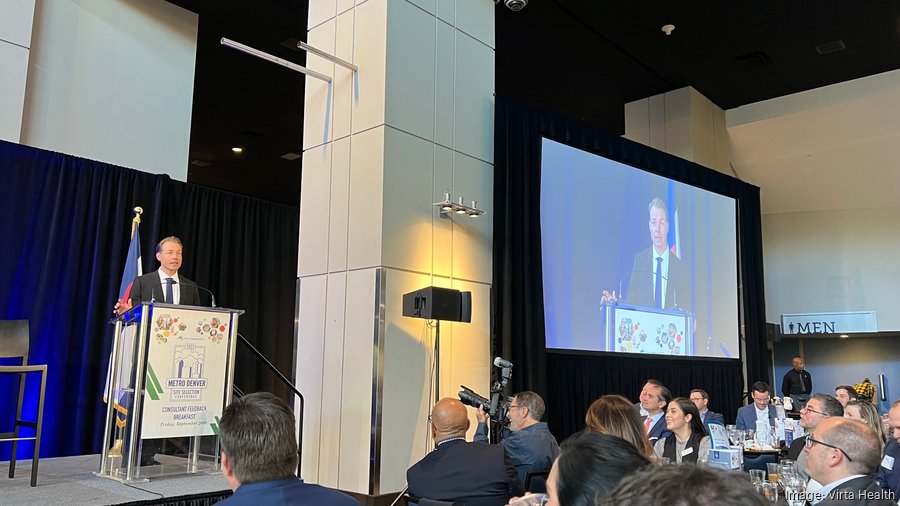
In October 2023, Virta Health, the leading company dedicated to helping individuals reverse diabetes, prediabetes, and obesity, opened new headquarters in Downtown Denver.

United Airlines is expanding its Flight Training Center in Denver with the construction of a four-story building that will add 155,000 square feet to United’s 23-acre campus.
New supply will continue to outpace demand in Denver through 2024, and occupancy rates are projected to remain depressed in the short-term. However, new construction starts have plummeted in Denver, declining by 130% year-over-year and over 600% since the peak of construction activity in 2022, as market participants report that the development process has become exceedingly difficult. This significant downshift is expected to help stabilize occupancy rates, reduce the need for concessions, and allow for the return of rent increases. Average rents are projected to stabilize by the end of 2024 and return to a positive trend in 2025, with an annual growth rate near 4% by the end of the year. The metro area’s expanding population, high levels of inbound household migration, and strong economic fundamentals will further support this recovery.
Sources: Costar; ESRI; U.S. Census Bureau; Yardi Matrix; U.S. Bureau of Labor Statistics