MARKET SNAPSHOT
$1,782 3Q 2024
95.5% 3Q 2024
2,849 [YTD: 8,606]
2.5% 3Q 2024
+40 BASIS POINTS
1,379 [YTD: 7,575]
In the first half of 2024, Chicago’s rental market experienced a 2.5% annual increase in effective rental rates, positioning it among the top 15 of the 50 largest markets in the third quarter.
Chicago’s occupancy rate rose to 95.5% in the third quarter of 2024, exceeding the city’s ten-year average and surpassing the national average by more than 150 basis points.
Significant development projects, like Microsoft’s upcoming data center at the former Foxconn plant, are set to create 2,500 construction jobs over the three-year build period, supporting blue-collar job growth.
2,849 UNITS
[YTD: 8,606]
The Chicago multifamily market has experienced strong demand, with renters absorbing nearly 1,500 more units than were delivered in the third quarter of 2024. Year-to-date, net demand has reached 8,606 units, surpassing the 7,575 units brought online by developers this year. The Downtown Chicago and North Lakefront submarkets have been key drivers, accounting for nearly 50% of the market’s total absorption over the past year. In contrast, submarkets experiencing more move-outs than move-ins, particularly in the southern and southeastern areas as well as manufacturing hubs near O’Hare Airport, have been hardest hit by the long-term decline in manufacturing jobs.
1,379 UNITS
[YTD: 7,575]
Chicago’s high taxes and complex entitlement processes are significant contributors to the tight housing supply. Unlike nearly all other top 50 metros by population, which experienced substantial supply expansions starting in 2022, Chicago’s multifamily construction levels have steadily declined. Currently, construction activity is approximately 40% below its peak. As of September 2024, there are 7,200 units under construction, with the majority of activity concentrated in the Downtown and North Lakefront submarkets. Roughly 3,000 units in these areas are slated for delivery over the next few years.
Strong demand in the Chicago area led to the absorption of 8,606 units in the first nine months of 2024, raising the average occupancy rate to 95.5%, well above the market’s ten-year average of 94.6%. Historically, Chicago’s occupancy rate has lagged behind the national average, but in the most recent quarter, it exceeded the national figure by over 150 basis points. This shift began in 2022 when multifamily markets across the U.S. experienced rapid inventory growth, while development in Chicago remained more measured. As a result, Chicago now ranks ninth nationally for the highest occupancy rate.
Nearly all submarkets reported occupancy rates above 95% in the last quarter, with over 85% showing year-over-year improvements. This indicates that Chicago is less affected by oversupply compared to other U.S. markets. The pace of new supply is expected to match demand through 2025, as it has over the past four quarters, keeping occupancy rates relatively stable while absorption figures continue to be positive.
Through the first three quarters of 2024, Chicago’s rental market recorded a 2.5% annual increase in effective rental rates, ranking it among the top 15 markets in Q3 across the 50 largest metros. This rise pushed the average rent for new leases to $1,782 by the end of the quarter. For the past seven quarters, Chicago has consistently outpaced the national average in rent growth—a first in over a decade, with this trend continuing since late 2022.Rents in the upper-tier segment increased by 1.5% year-over-year, while mid-tier segment rents rose by 3.2%. Workforce housing rents also saw a solid 2.6% increase.
Most of Chicago’s 43 multifamily submarkets experienced positive rent growth over the past year in the third quarter of 2024. Submarkets with inventories exceeding 10,000 units, which posted the highest year-over-year rent increases, saw minimal to no new inventory during the past 12 months. In contrast, the South Chicago and Fox River Valley submarkets were the only areas to record year-over-year declines in effective rent.
In August 2024, the job market in the broader Chicago-Naperville-Elgin, IL-IN-WI area remained relatively flat compared to the previous year, according to the Bureau of Labor Statistics (BLS). However, several key sectors showed healthy job growth. The Education and Health Services sector added 15,100 positions, reflecting a 2.0% annual growth rate. The manufacturing sector also demonstrated resilience, with the addition of 9,100 jobs, a 2.1% increase. Since mid-2021, manufacturing has steadily recovered from 2024’s losses and is nearing its previous decade-high employment level of 423,000 positions.
Other sectors, including Mining, Logging, and Construction, as well as Government, also reported job growth. These gains were offset by declines in other sectors, particularly white-collar industries. The largest contraction occurred in the Professional and Business Services sector, which saw a 3.6% decline, losing 30,800 jobs. This reduction in white-collar jobs is likely tied to the higher interest rate environment and Chicago’s role as a financial hub.
August 2024 ANNUAL JOBS CREATED
AUGUST 2024 EMPLOYMENT GROWTH
AUGUST 2024 Unemployment rate
4.2% us August rate
Nominal Change
from August 2023
to August 2024: 15,100
Percent Change: 2.0%
Nominal Change
from August 2023
to August 2024: 9,500
Percent Change: 1.8%
Nominal Change
from August 2023
to August 2024: 9,100
Percent Change: 2.1%
Nominal Change
from August 2023
to August 2024: 7,700
Percent Change: 3.9%
Nominal Change
from August 2023
to August 2024: 1,700
Percent Change: 0.9%
| Sector | Nominal Change from August 2023 to August 2024 | Percent Change |
|---|---|---|
| Education and Health Services | 15,100 | 2.0% |
| Government | 9,500 | 1.8% |
| Manufacturing | 9,100 | 2.1% |
| Other Services | 7,700 | 3.9% |
| Mining, Logging, and Construction | 1,700 | 0.9% |
| Leisure and Hospitality | -1,000 | -0.2% |
| Information | -3,100 | -3.9% |
| Financial Activities | -3,600 | -1.1% |
| Trade, Transportation, and Utilities | -4,800 | -0.5% |
| Professional and Business Services | -30,800 | -3.6% |

CloudHQ is developing 1.5M SF data center at the former United Airlines headquarters site in Mount Prospect.
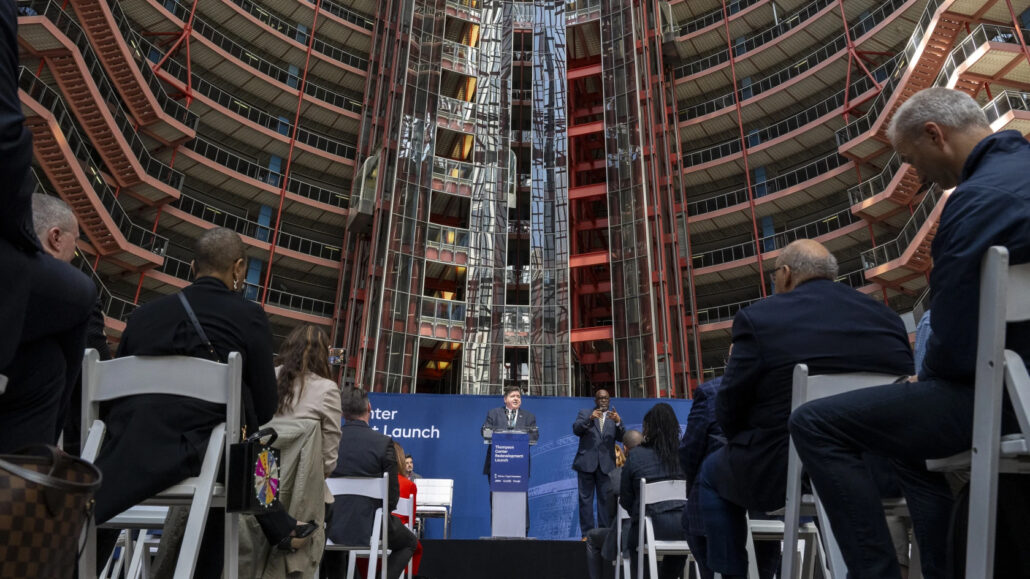
Google will be moving into the Loop with the redevelopment of the Thompson Center for its new Chicago headquarters.

Microsoft will invest $3.3B into a new data center at former Foxconn site.
Chicago’s apartment market heading into 2025 holds an optimistic outlook, driven by a limited inventory under construction and sustained healthy demand for rental units. Despite challenges such as complicated entitlement processes and a structurally higher unemployment rate compared to the broader U.S., Chicago’s labor market remains resilient. While the city has seen reductions in white-collar jobs—a traditional strength—the blue-collar sectors, which have historically remained a weak point, are now experiencing steady growth.
Several significant economic development projects, such as Microsoft’s upcoming data center at the former Foxconn plant, are poised to support this trend. This project alone is expected to create up to 2,500 construction jobs over the three-year build process, signaling continued strength in blue-collar employment for Chicago. Additionally, as the Federal Reserve begins to lower interest rates, the financial services sector, which has faced recent job cuts due to the high-rate environment, is expected to see a resurgence in hiring in the near future.
For multifamily owners and operators, the challenges that make the Chicago market difficult to navigate—such as onerous development processes—may ultimately work to their advantage. With constrained supply, Chicago’s apartment market is well-positioned to outperform the broader U.S. market through 2025 and 2026.
Sources: Costar; ESRI; U.S. Census Bureau; Yardi Matrix; U.S. Bureau of Labor Statistics